

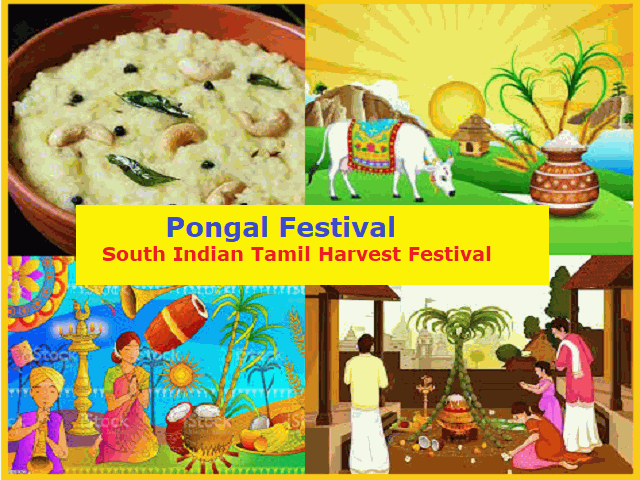
Commonly known as Tai Pongal or Thai Pongal, Pongal is one of the most well-liked festivals in the Southern part of India. This competition is widely known with zeal and fervor in Tamil Nadu and marks the start of Uttarayan. The four-day annual festival not only celebrates the sun’s journey in the north but also thanks the Lord for the plentiful harvest. Pongal is sort of the same as Thanksgiving, which happens in the USA. The sun plays a vital role in agriculture, and attending to the sun god is what Pongal is all about.
A traditional dish of a similar name is additionally prepared on this auspicious occasion that signifies abundance and prosperity. Right before the beginning of Pongal, a global Pongal fest is held close to Tuticorin.
What is Pongal?
Pongal is a Hindu harvest festival that’s significant in style within the Tamil community. It’s an ancient festival that had its origin in the three hundred B.C. Pongal has been mentioned within the inscriptions at Veeraraghava Swamy Temple, which was from the Chola reign. Even the Pongal dish has been mentioned in the spiritual texts of the Chola reign. It talks about careful recipes that are ready in today’s era on the auspicious occasion of Pongal.
According to legends, on the primary day of the Pongal celebration, Lord Krishna raised Mount Govardhan to shield the individuals of the village from the wrath of Indra, the rain god. Another legend is that of Lord Shiva. The World Health Organization asked Basava to inform individuals to take an oil bath often. It happened on the third day of Pongal.
Why is Pongal celebrated?
The celebration of Pongal goes back to Hindu mythology. It’s believed that Lord Shiva sent his bull, Basava, on our planet to unfold the message that individuals ought to take an oil bath daily. However, Basava proclaimed that everybody ought to take an oil bath once in an exceedingly month and eat daily. This maddened Lord Shiva, and he cursed Basava to assist individuals in their agricultural activities in order that they would produce a lot of crops. Thence within the epoch, individuals celebrate Pongal with cows and crops.
As the Sun God and the Lord Hindu deity play the foremost vital role in cultivating higher crops, Pongal is devoted to each of the lords. The individuals of the state discard their recent belongings and purchase new garments to mark the start of recreation.
How is it celebrated?
- The first day is usually referred to as Bhogi Pongal. It’s dedicated to the Lord, a Hindu deity who is the supreme god of the rains and clouds. Folks clean their homes and mark the onset of Pongal. Within the rural areas, there’s a ceremony referred to as Bhogi Mantalu where villagers sing and dance around a fire to please the Lord. The fire is formed out of agricultural wastes, recent household products, and garments. Farmers smear their agricultural tools with wood pastes that signify a prosperous harvest.
- The main rituals are performed on the second day, which is usually referred to as the Thai Pongal or Surya Pongal. The day begins with planning the Kolam at the entrance of the house. The females of every house should create the planning when taking a shower early in the morning. Everybody wears ancient apparel to perform the ritual.
- The third day of Pongal recreation is termed Mattu Pongal, and it’s dedicated to the ox and different domestic animals. Cows and bulls who contribute to raising yielding crops are idolized these days.
- The fourth day is known as Kaanum Pongal, which is the Last Judgement of Pongal recreation. The Tamils worship the Sun god and provide food that has been prepared on these days. Sugarcane is the main provider because it symbolizes sweetness and happiness.